Driving 40% increase in course completion rate for new learners by peer engagement

Driving 40% increase in course completion rate for new learners by peer engagement

Overview

Simplilearn was successfully acquiring learners, but very few were completing their programmes. For a business built around professional upskilling, low completion rates affected learner outcomes, retention, and long-term trust.

WhatDesigned a peer-driven learning experience that helped learners stay engaged and complete certification programmes.
WhyHigh enrolment wasn't translating into successful learners. The challenge wasn't getting people to start, it was helping them stay motivated long enough to finish.
My rolePartnered with Product Owner, Lead Designer and engineering throughout research, concept validation and interaction design.
Team1 Lead UX Designer, 1 UX Design Intern (me), 1 Product Owner
DurationMay 2022 - Sept 2022

Impact

Impact

40%

40%

Increased Course Completion Rate for new learners

Increased Course Completion Rate for new learners

28%

28%

Reduced Onboarding drop off by simplifying entry flows and clarifying early learning steps

Reduced Onboarding drop off by simplifying entry flows and clarifying early learning steps

What did the old experience feel like?

What did the old experience feel like?

Fewer than 15% of learners who enrolled ever finished.

Course completion stayed under 15% despite strong enrollment. Five reasons kept surfacing:
Lack of self-discipline
Lack of motivation
No peer engagement
No time management
Unsatisfied online experience

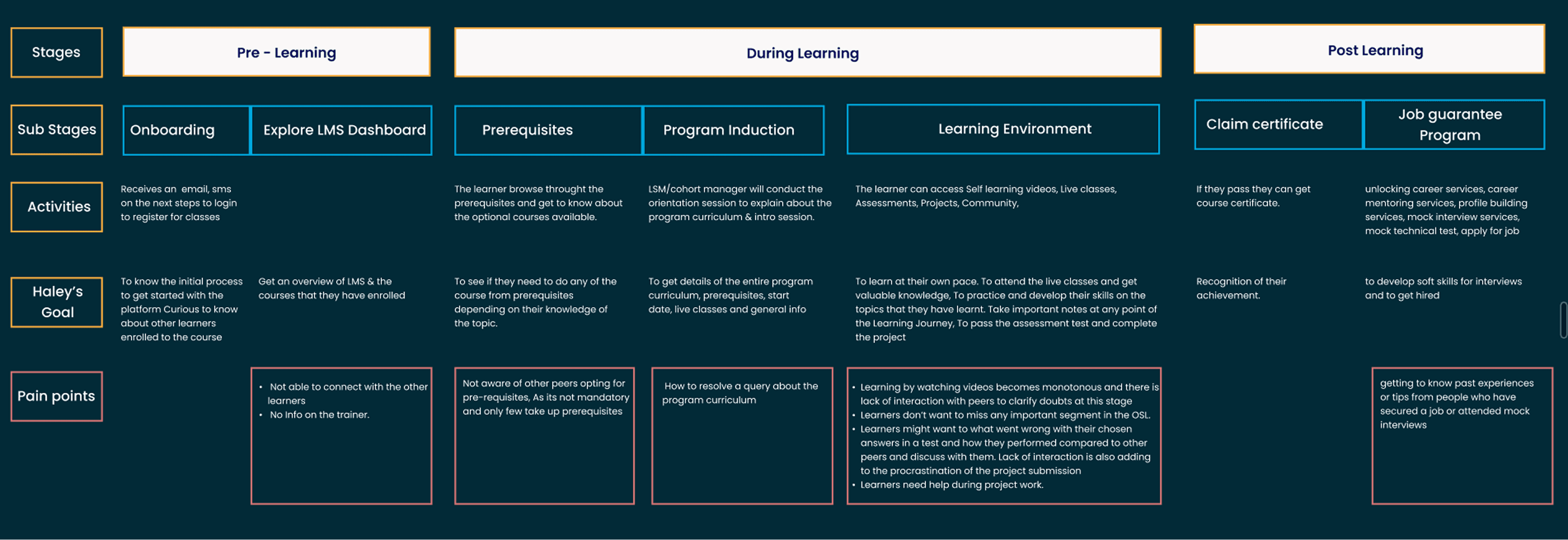
User's current journey

User's current journey

We initially assumed onboarding friction was causing learners to leave. Research showed something different, most learners dropped off much later, when motivation declined and learning became increasingly isolated.

We initially assumed onboarding friction was causing learners to leave. Research showed something different, most learners dropped off much later, when motivation declined and learning became increasingly isolated.

Pre-learning
During learning
Post-learning

Understanding the drop-off

Understanding the drop-off

Questions I set out to answerWhy learners drop off before finishing the program
Under 20% completion, jumped to last courseLocation: IndiaDemographic: mixed groupQualitative research, focus groups, surveys
From the surveys
0%want group study for common topics and doubts
0%procrastinate on submissions from low interaction
0%never started the certificate program they enrolled in
From the interviews
Projects create a sense of aversionCareer-switchers see assignments before their first class and disengage
Varied experience levels for usersBeginners can't find peers at their level to learn with
Users actively look for study groupsLearners already build workarounds — side chats, shared links, evidence that collaboration was valuable, but unsupported.

Together, these patterns pointed to one redefined problem:

Understanding Peer Engagement Through a Behavioural Lens

Understanding Peer Engagement Through a Behavioural Lens

The issue wasn't access to content. Learners needed timely social reinforcement to sustain motivation over several weeks.
Fogg Behavior Model

Fogg Behavior Model

BMAT

Behavior happens when Motivation, Ability, and Trigger converge.

MMotivation
Tap into learners' desire for support, recognition, and progress.Eg: "75% of your peers completed this module."
AAbility
Make engaging extremely easy and low-stakes.Eg: inline "Ask a peer" buttons, one-click replies.
TTrigger
Nudge learners at the right moment: stuck, idle, or back from a break.Eg: "You've paused here for 3 mins — want to see what peers said?"
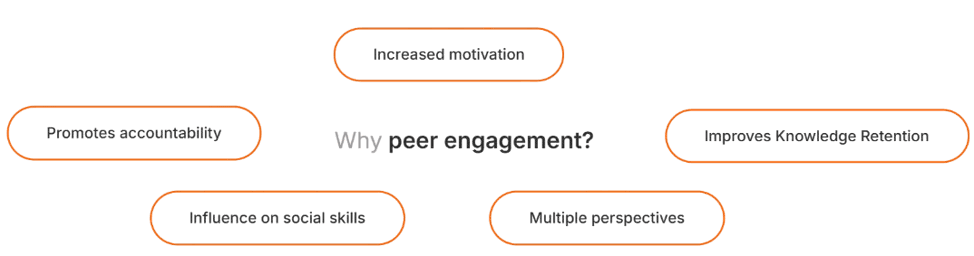
Why peer learning works:
Teaching builds retention
Discussion builds accountability
Peer views deepen understanding

Redefined Problem Statement

Redefined Problem Statement

How might we

motivate learners to engage and learn from other peers, to increase the completion rate of the program?
Initial exploratory concepts & features

Initial exploratory concepts & features

Explored four directions before landing on one.

Leaderboards
Why we explored itIncrease motivation
Why not chosenIncreased anxiety for beginners
Gamification
Why we explored itEncourage consistency
Why not chosenRewarded streaks, not meaningful learning
Mentor matching
Why we explored itPersonal support
Why not chosenOperationally expensive and difficult to scale
Peer collaboration
Chosen
Why we explored itEncouraged accountability with low implementation cost

Narrowed a wide set of concepts using a decision matrix scored on feasibility and impact.

Narrowed a wide set of concepts using a decision matrix scored on feasibility and impact.

Scored — effort × impact
High impactLow effort · High effort →
Learners introduction within the cohortProject Discussion threadsDiscussions in Self Learning Videos
Group ProjectsPeer feedback
Breakout rooms within Live classes
Low impact

Design Interventions for Learner's touchpoints

Design Interventions for Learner's touchpoints

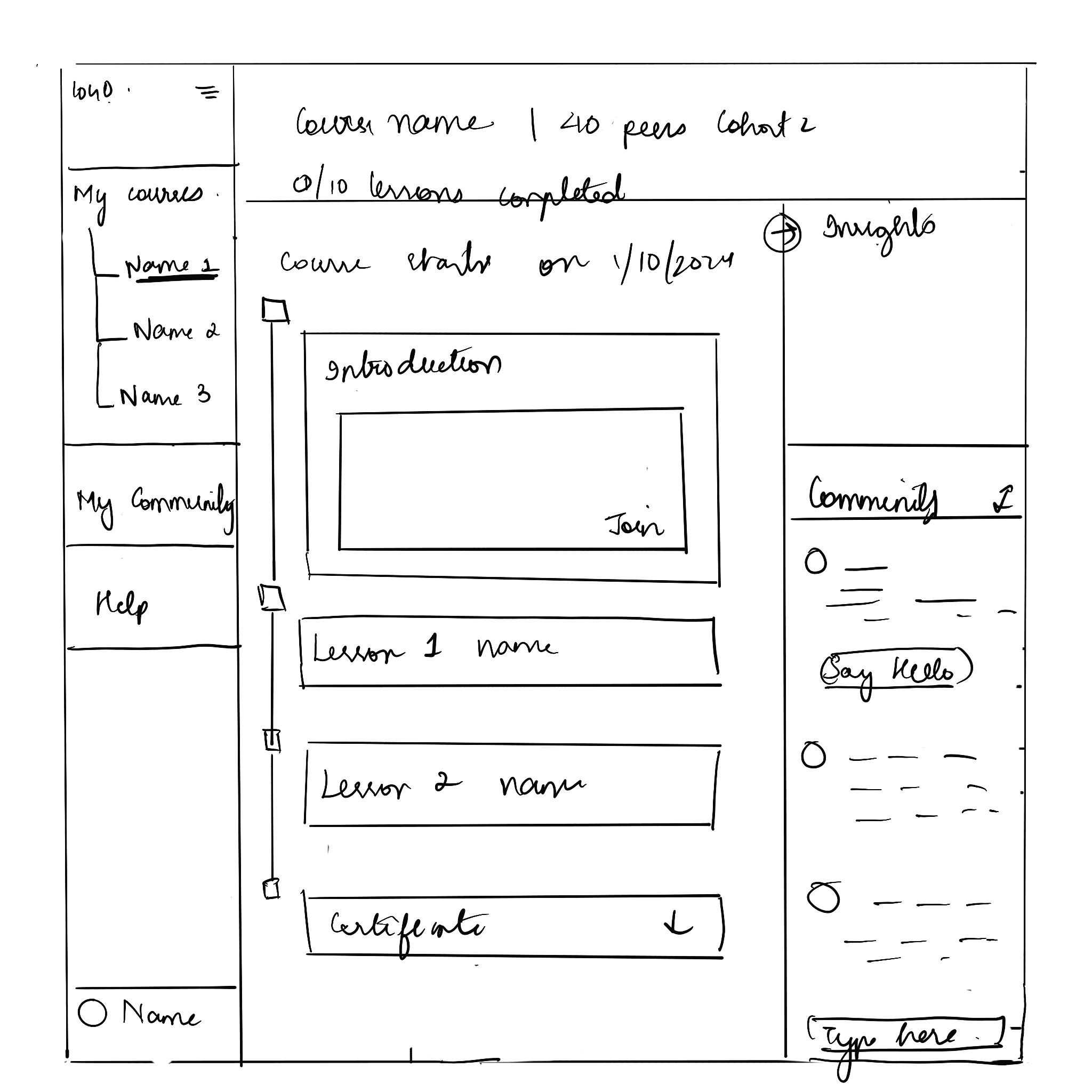
Getting to know peers in the same cohort

Lowered the activation barrier by giving learners a shared starting point before classes began, making the course feel like a cohort rather than an individual journey.

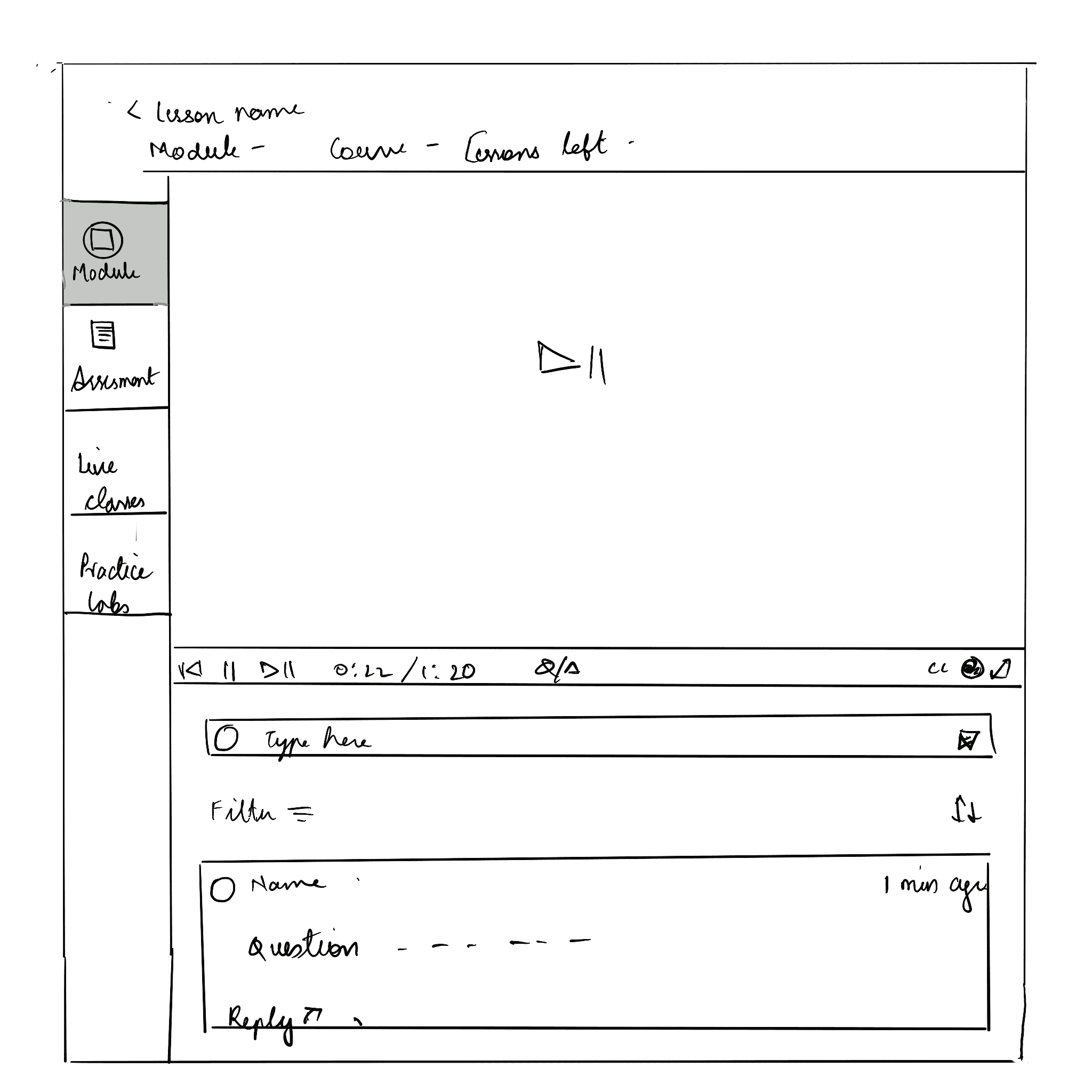
Self Learning Videos

Turned passive video consumption into collaborative learning, allowing questions to surface exactly where confusion occurred instead of forcing learners to leave the lesson.

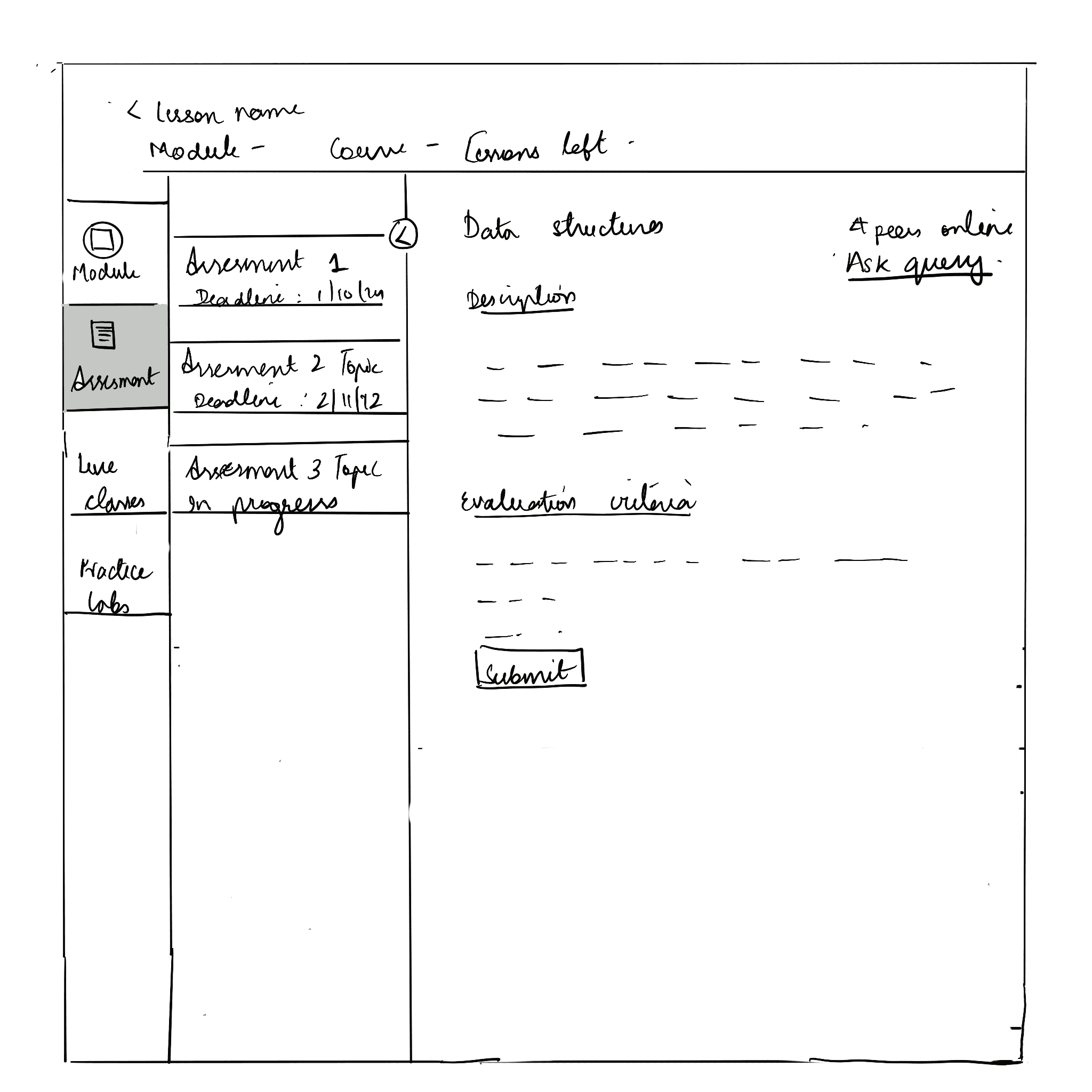
Assessments - Group Projects

Reduced submission anxiety by making assignments collaborative before they became evaluative.

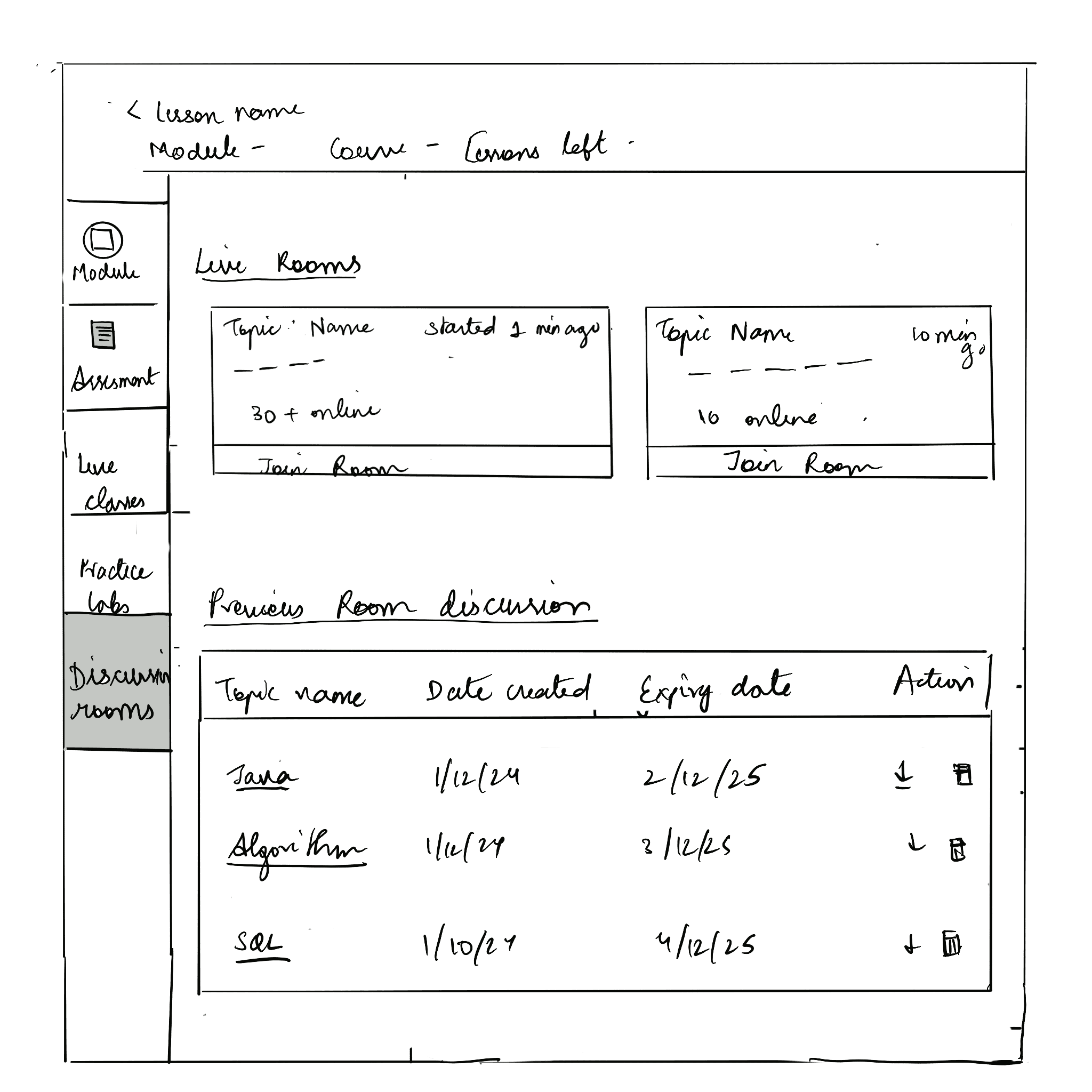
Live Discussion Rooms

Encouraged lightweight accountability through shared progress rather than competitive rankings.

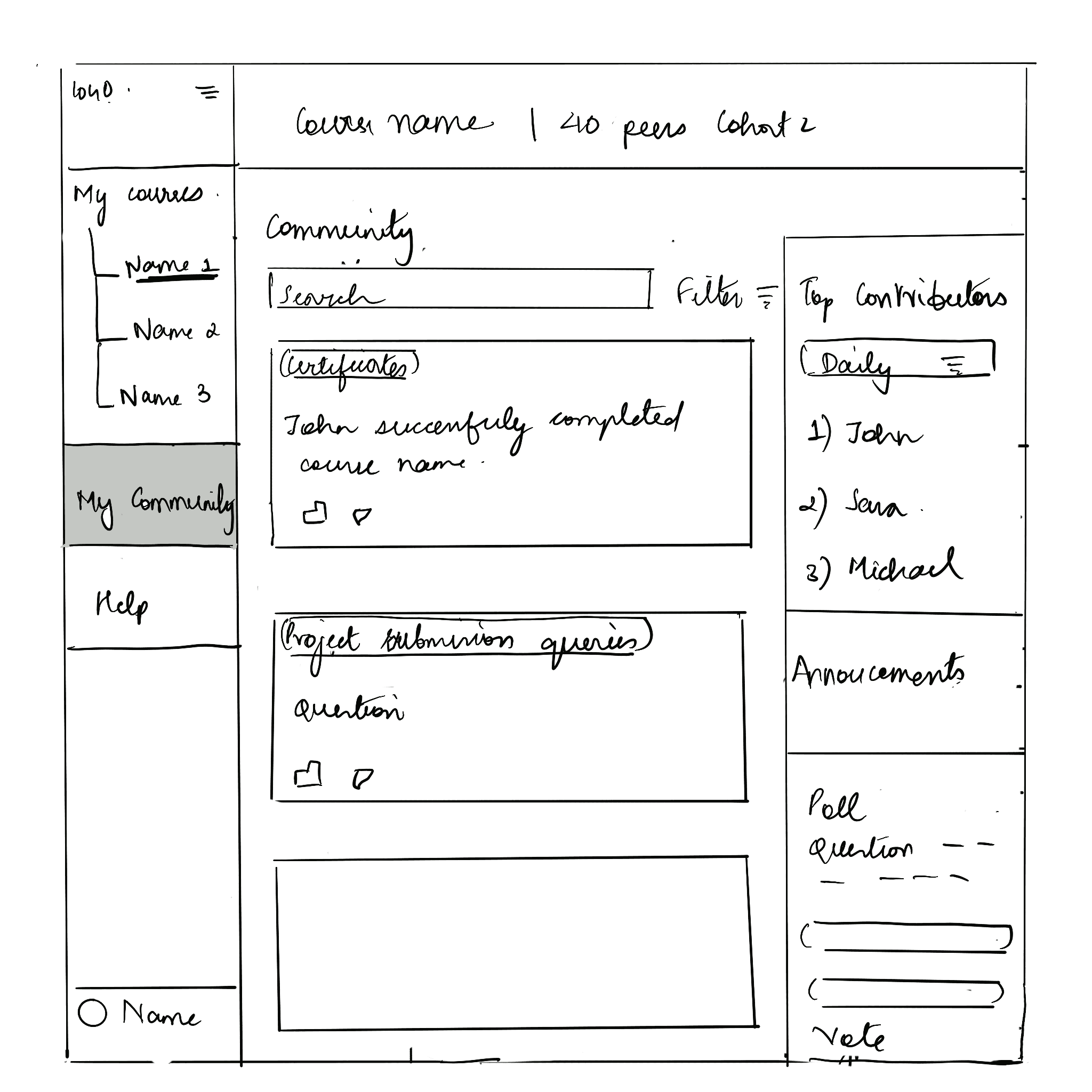
Community

Kept discussions contextual to where learners were already studying, avoiding the drop-off common in standalone community spaces

Learnings & Takeaways

Learnings & Takeaways

This project changed how I think about engagement design. The solution wasn't adding more features, it was identifying the moments where learners naturally needed encouragement and designing around those behaviours. Since then, I've approached retention problems by looking beyond interface friction and understanding the behavioural systems underneath.

This project changed how I think about engagement design. The solution wasn't adding more features, it was identifying the moments where learners naturally needed encouragement and designing around those behaviours. Since then, I've approached retention problems by looking beyond interface friction and understanding the behavioural systems underneath.

This shipped in 2023. If I designed it today, AI would change these.
Match accountability partners based on learning pace, availability and goals instead of static cohorts.
Detect disengagement signals early and surface personalised interventions before learners abandon the course
Use AI to summarise long discussion threads so learners can quickly catch up instead of reading dozens of messages.

Let's make something big together

Before you go, leave a doodle/note for me or take a little piece of my hometown with you.

untitled - Paint
FileEditViewImageOptions
For Help, click Help Topics on the Help Menu.
IP-1

Made with love by

& a lot of caffeine

©2026 All rights reserved

Yes, this is my hometown and here's me collecting seashells

Let's make something big together

Before you go, leave a doodle/note for me or take a little piece of my hometown with you.

untitled - Paint
FileEditViewImageOptions
For Help, click Help Topics on the Help Menu.
IP-1

Made with love by

& a lot of caffeine

©2026 All rights reserved

Yes, this is my hometown and here's me collecting seashells

Let's make something big together

Before you go, leave a doodle/note for me or take a little piece of my hometown with you.

untitled - Paint
FileEditViewImageOptions
For Help, click Help Topics on the Help Menu.
IP-1

Made with love by

©2026 All rights reserved